Thymosin Alpha-1
$74.99
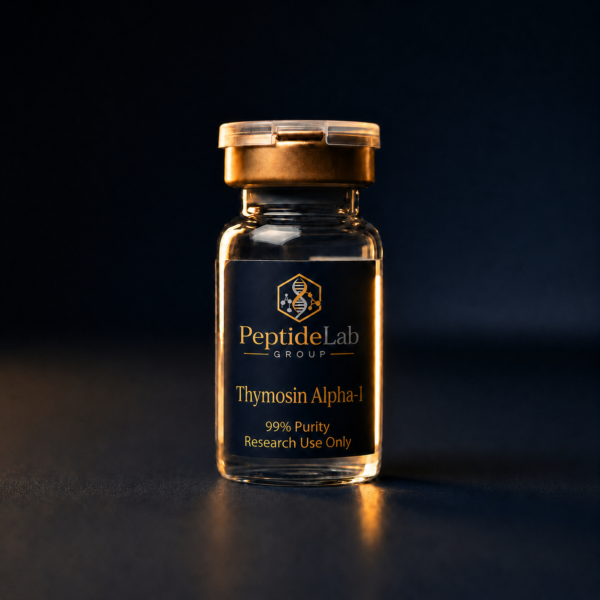
Research peptide vial
Thymosin alpha 1 is a peptide naturally occurring in the thymus that has long been recognized for modifying, enhancing, and restoring immune function. Thymosin alpha 1 has been utilized in the treatment of immunocompromised states and malignancies, as an enhancer of vaccine response, and as a means of curbing morbidity and mortality in sepsis and numerous infections. Studies have postulated that thymosin alpha 1 could help improve the outcome in severely ill corona virus disease 2019 patients by repairing damage caused by overactivation of lymphocytic immunity and how thymosin alpha 1 could prevent the excessive activation of T cells. In this review, we discuss key literature on the background knowledge and current clinical uses of thymosin alpha 1. Considering the known biochemical properties including antibacterial and antiviral properties, time-honored applications, and the new promising findings regarding the use of thymosin, we believe that thymosin alpha 1 deserves further investigation into its antiviral properties and possible repurposing as a treatment against severe acute respiratory syndrome coronavirus-2.
- Description
Description
thymosin alpha-1
Product Overview
Thymosin Alpha-1 from PeptideLab Group is presented as a premium research peptide vial for laboratory and analytical research use only. This product is listed for qualified research customers, research supply buyers, and catalog-based peptide sourcing needs.
Thymosin Alpha-1 is commonly positioned in research catalogs under immune pathway, peptide signaling, and cellular response studies. PeptideLab Group supplies this product with clean brand presentation, professional catalog structure, and research-use-only compliance wording.
Product Details
- Brand: PeptideLab Group
- Product: Thymosin Alpha-1
- Category: Immune Support Research Peptides
- Form: Lyophilized research peptide vial
- Use: Laboratory research use only
- Packaging: PeptideLab Group branded vial
- Documentation: COA, HPLC, and MS documentation may be available where applicable
Quality & Handling
Each product is prepared for research catalog presentation with batch-style labeling, controlled packaging standards, and support for documentation requests where applicable. Product availability, batch documentation, and supply details may vary by inventory.
Research Use Notice
This product is intended strictly for laboratory research use only. It is not intended for human consumption, veterinary use, medical use, diagnosis, treatment, cure, or prevention of disease. Buyers are responsible for complying with all laws and regulations in their jurisdiction.
Thymosin alpha 1 is a 28 amino acid peptide originally isolated from the thymus[], which has been extensively studied in terms of its functions in the immune system. Thymosin alpha 1 has long been recognized as an immune enhancing, immune modulating, as well as an immune restoring agent[, and as such it has been utilized in several clinical and research settings. The synthetic form of thymosin alpha 1, thymalfasin, is approved in more than 35 countries for the treatment of hepatitis B and C and as an immune enhancer in several other diseases[]. More specifically, it has been of benefit as a means of augmenting immune response in immune deficiencies[, psoriatic arthritis[, aging[], as well as in increasing response to vaccines[ and decreasing chemotherapy-induced toxicity. It has additionally been of value in treating oncologic patients, especially those with hepatocellular carcinoma, renal cell carcinoma and non-small cell lung cancer[. Last but not least, it has been used in the fight of numerous infections, such as human immunodeficiency virus (HIV), pseudomonas and mold toxicity[, as well as sepsis, and recently in severely ill coronavirus disease 2019 (COVID-19) patients. In light of the current pandemic situation, efforts are being made worldwide to understand the impact of infection caused by severe acute respiratory syndrome coronavirus-2 (SARS-CoV-2) on the immune system in the hopes of getting closer to an effective treatment. To this end, it would be worthwhile to further investigate thymosin alpha 1 through the relevant published literature. In this review, we aim to understand the characteristics of thymosin alpha 1, from its chemical structure and biological properties all the way to its clinical applications, their safety and efficacy which would provide an insight on whether it could be used as a therapeutic option to help curb mortality and improve outcomes in severely ill COVID-19 patients.
Related Products