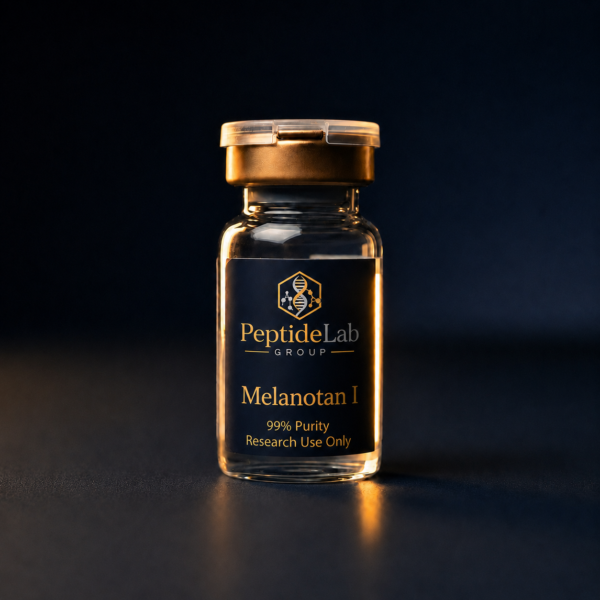
melanotan 1
$64.99
Research peptide vial
melanotan 1 Afamelanotide, the first and most studied synthetic α‐MSH analogue, is a nonselective melanocortin tridecapeptide that can bind and activate MC1R. The structure of afamelanotide, [Nle, DPhe ]‐α‐MSH (also referred to as NDP‐α‐MSH), is identical to physiologic α‐MSH, with the exception of two amino acids at positions 4 and 7Afamelanotide is a subcutaneous implant allowing for controlled release that is approved by the United States Food and Drug Administration (FDA) to increase pain‐free light exposure in adults with a history of phototoxic reactions from EPP and by the European Medicines Agency (EMA) to prevent phototoxicity in adults with EPPFollowing visible light exposure, patients with EPP experience severe, phototoxic‐related pain and consequently may dramatically limit their exposure to light. Therefore, this population may represent a low–UV‐exposed population in which to assess the impact of chronic MC1R agonism without the major risk factor of developing UV‐mediated melanoma
- Description
Description
melanotan 1
melanotan 1 from PeptideLab Group is presented as a premium branded research peptide vial for laboratory and analytical research use only. This product is listed for qualified research customers and is not intended for human consumption. Each vial is prepared with a clean branded presentation suitable for professional product catalogs and research-focused ecommerce layouts.
To date, 201 patients have been treated in a clinical setting. In an open‐label, Phase 2 trial, 5 patients with solar urticaria received a single subcutaneous dose of afamelanotide, which resulted in increased melanin density and photosensitivity improvement, such as increased minimum urticarial dose and decreased weal area. An increase in pre‐existing nevi pigmentation was reported. Afamelanotide may also have an anti‐inflammatory effect in patients with mild‐to‐moderate acne vulgaris, as demonstrated by an open‐label, Phase 2 trial (n = 3) in which afamelanotide resulted in a decreased number of total and inflammatory acne lesions. In Phase 3 double‐blind randomized placebo‐controlled trials of 167 patients with EPP, melanocytic nevi were reported in 2 of 86 patients (4%) receiving afamelanotide and 1 of 81 patients (2%) receiving placebo. Mild hyperpigmentation occurred at the implant site in one‐third of the patients who received afamelanotide. No melanomas were reported in the afamelanotide group. In a placebo‐controlled study of 65 White individuals, melanin density was significantly increased in all those receiving 3 months of treatment with afamelanotide, which was accompanied by decreased thymine dimer formation (indicative of reduced DNA damage). In a longitudinal observational study of 115 patients with EPP treated with afamelanotide for up to 8 years, 2 patients reported a new melanocytic nevus, which appeared 2.5 years after the first dose of afamelanotide in 1 patient and 5 years after the first dose in the other patient. More than 1000 patients have been exposed to afamelanotide with no melanoma events reported, with many who receive continuous treatment for 5 years and some for >10 years.
Product Overview:
Brand: PeptideLab Group
Product:melanotan 1
Category: Aesthetic Research Peptides
Form: Lyophilized peptide powder
Purity: ≥98% where applicable
Testing: COA, HPLC, and MS documentation available on request where applicable
Packaging: PeptideLab Group branded research vial
Stock Status: In stock
Research Category Information:
Melanotan I is positioned within aesthetic research peptide categories because of its relevance to melanocortin-related research models. This listing is for laboratory research and catalog use only, with no intended human consumption or therapeutic claims.
The melanocortin‐1 receptor (MC1R) is a G protein‐coupled receptor that plays a pivotal role in human skin pigmentation, melanin synthesis, redox homeostasis and inflammation. Loss‐of‐function MC1R variants suppress G protein‐coupled receptor coupling or cell surface expression leading to a decrease in adenyl cyclase activation and intracellular levels of cyclic adenosine monophosphate. Chronic activation of MC1R can occur in certain medical conditions such as Addison’s disease and physiologic states such as pregnancy melasma. MC1R activation is more commonly caused by environmental exposure to ultraviolet (UV) radiation. Approved pharmacologic melanocortin agonists that activate MC1R signalling in a targeted manner or as a bystander effect have recently become available for erythropoietic protoporphyria, sexual desire disorders, monogenic obesity and syndromic obesity. Further, small peptide analogues of α–melanocortin‐stimulating hormone, human MC1R selective agonists, are photoprotective, decreasing the adverse impact of UV radiation (a primary risk factor for skin cancer) and are being investigated as potential chemoprevention strategies. MC1R activation through induction of UV‐protective skin pigmentation increased DNA repair, and control of aberrant cell growth may reduce the risk of melanoma but importantly does not prevent melanoma particularly in individuals with risk factors and regular skin examination remains critical in high‐risk individuals.
Related Products