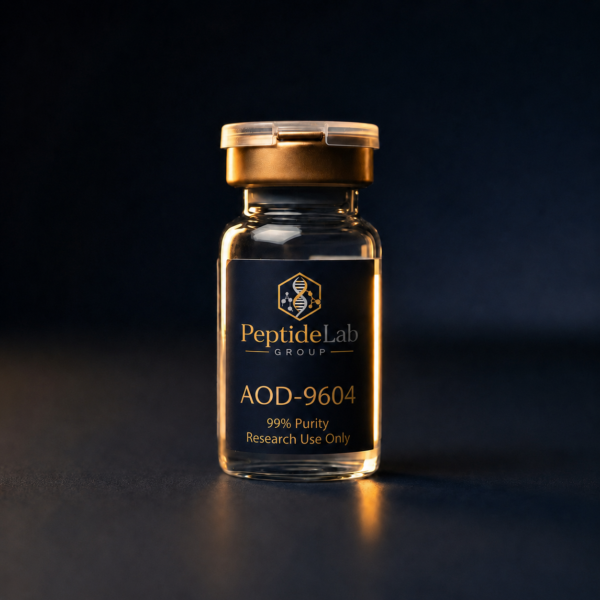
AOD-9604
$49.99
Research peptide vial
The rising tide of obesity and its related disorders is one of the most pressing health concerns worldwide, yet existing medicines to combat the problem are disappointingly limited in number and effectiveness. Recent advances in mechanistic insights into the neuroendocrine regulation of body weight have revealed an expanding list of molecular targets for novel, rationally designed antiobesity pharmaceutical agents. Antiobesity drugs act via any of four mechanisms: 1) decreasing energy intake, 2) increasing energy expenditure or modulating lipid metabolism, 3) modulating fat stores or adipocyte differentiation, and 4) mimicking caloric restriction. Various novel drug candidates and targets directed against obesity are currently being explored. A few of them are also in the later phases of clinical trials. This review discusses the development of novel antiobesity drugs based on current understanding of energy homeostasis
- Description
Description
AOD-9604
AOD-9604 from PeptideLab Group is presented as a premium branded metabolic research peptide for laboratory and analytical research use only. This product is listed for qualified research customers and is not intended for human consumption. Each vial is prepared for clean catalog presentation with PeptideLab Group branding, research-use labeling, and product documentation details that can be added by the store owner where applicable.
According to the guidelines of the National Institute of Health (NIH) regarding the treatment of obesity, “weight loss drugs approved by the FDA [US Food and Drug Administration] may only be used as part of a comprehensive weight loss program, including dietary therapy and physical activity, for patients with a BMI [body mass index] of ≥30 with no concomitant obesity-related risk factors or diseases, and for patients with a BMI of ≥27 with concomitant obesity-related risk factors or diseases”.The risk factors and diseases considered important enough to warrant pharmacotherapy at a BMI of 27–29.9 are hypertension, dyslipidemia, coronary heart disease (CHD), type 2 diabetes, and sleep apnea . In 2007–2008, the prevalence of American adults having a BMI greater than 30 was 32.2% among men and 35.5% among women . In light of the NIH guidelines, this startling preponderance of obesity indicates pharmacotherapy is warranted for more than one-third of all American adults. Yet, existing medicines to combat the problem are disappointingly few in number and efficacy. In the past few years, understanding of the mechanisms involved in regulating feeding behavior and energy expenditure has evolved considerably, and targeting these mechanisms for drug development has garnered greater attention as well. This review discusses the neuroendocrine control of energy homeostasis, drug targets, and the possible future range of anti-obesity agents
Product Overview:
Brand: PeptideLab Group
Product: AOD-9604
Category: Metabolic Research Peptides
Form: Research peptide / compound vial
Purity: Documentation available on request where applicable
Testing: COA, HPLC, and MS documentation available on request where applicable
Packaging: PeptideLab Group branded research vial
Stock Status: In stock
Research Category Information:
This product belongs to the metabolic research category, which includes compounds studied in laboratory settings for metabolic signaling, peptide pathway analysis, energy-balance models, receptor activity, and related biochemical research frameworks. It is supplied strictly for research use only and should be handled according to proper laboratory procedures.
Important Notice:
For laboratory research use only. Not for human consumption. Not intended to diagnose, treat, cure, or prevent any disease.
Related Products