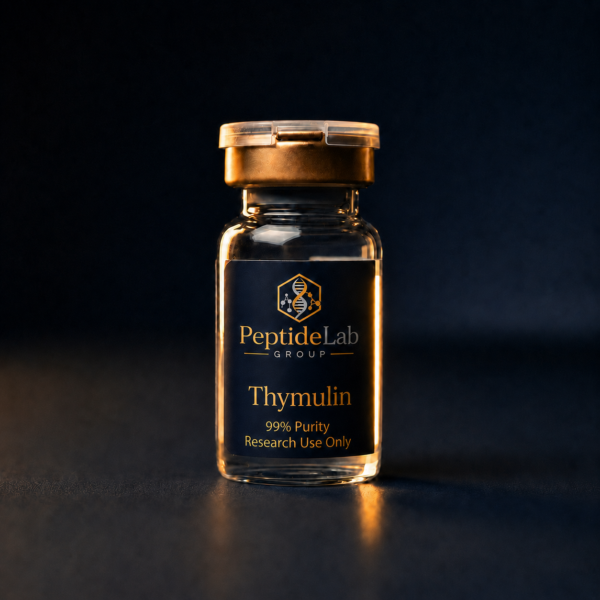
Thymulin
$64.99
Research peptide vial
thymulin The immune system is functionally linked to the nervous and endocrine systems thus constituting an integrated homeostatic network.1 Within this network, the neuroendocrine system monitors and controls the physical and chemical variables of the internal milieu. On its part, the immune system perceives, through antigenic recognition, an internal image of the macromolecular and cellular components of the body and reacts to alterations of this image, effectively participating in the “biological” homeostasis of the organism.
- Description
Description
Thymulin
Product Overview
thymulin peptide from PeptideLab Group is presented as a premium research peptide vial for laboratory and analytical research use only. It is listed under immune support research peptides for customers organizing products around thymic peptide research, immune pathway study, and peptide signaling research.
This product page is designed to support a professional research catalog structure with clean product information, category alignment, and documentation-friendly presentation.
Product Details
- Brand: PeptideLab Group
- Product: Thymulin
- Category: Immune Support Research Peptides
- Form: Lyophilized research peptide vial
- Use: Laboratory research use only
- Packaging: PeptideLab Group branded vial
- Documentation: COA, HPLC, and MS documentation may be available where applicable
Quality & Handling
PeptideLab Group product listings are structured for research buyers who need clear catalog categories, clean presentation, and professional support for documentation requests where available.
Research Use Notice
This product is intended strictly for laboratory research use only. It is not intended for human consumption, veterinary use, medical use, diagnosis, treatment, cure, or prevention of disease. Buyers are responsible for complying with all laws and regulations in their jurisdiction.
Thymulin is a thymic hormone exclusively produced by the thymic epithelial cells. It consists of a nonapeptide component coupled to the ion zinc, which confers biological activity to the molecule. After its discovery in the early 1970s, thymulin was characterized as a thymic hormone involved in several aspects of intrathymic and extrathymic T cell differentiation. Subsequently, it was demonstrated that thymulin production and secretion is strongly influenced by the neuroendocrine system. Conversely, a growing core of information, to be reviewed here, points to thymulin as a hypophysotropic peptide. In recent years, interest has arisen in the potential use of thymulin as a therapeutic agent. Thymulin was shown to possess anti-inflammatory and analgesic properties in the brain. Furthermore, an adenoviral vector harboring a synthetic gene for thymulin, stereotaxically injected in the rat brain, achieved a much longer expression than the adenovirally mediated expression in the brain of other genes, thus suggesting that an anti-inflammatory activity of thymulin prevents the immune system from destroying virus-transduced brain cells. Other studies suggest that thymulin gene therapy may also be a suitable therapeutic strategy to prevent some of the endocrine and metabolic alterations that typically appear in thymus-deficient animal models. The present article briefly reviews the literature on the physiology, molecular biology, and therapeutic potential of thymulin.
Related Products