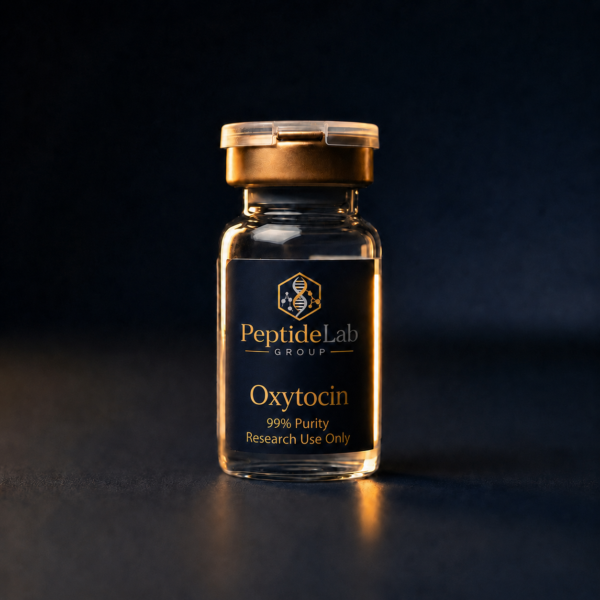
Oxytocin
$49.99
Research peptide vial
oxytocin Traditionally, it has been artists, poets, and playwrights who have made the greatest progress in humanity’s understanding of love. However, recently endocrinologists, who were never considered very romantic, have challenged this notion, and now rather have a lot to say about how and why people love each other. Research is also shedding light on some of the more extreme forms of sexual behavior. And, controversially, some endocrine scientists see hormonal manipulation as the doorway to a future where love is guaranteed, because it will be provided chemically, or even genetically engineered from conception.
- Description
Description
Oxytocin
Product Overview
Oxytocin from PeptideLab Group is presented as a premium research peptide vial for laboratory and analytical research use only. It is listed under Hormonal Support Peptides for buyers organizing research products around peptide signaling and hormone-related laboratory research categories.
This product is prepared for research catalog use with clean branding, clear product details, and compliance-focused wording suitable for a professional peptide research website.
Product Details
- Brand: PeptideLab Group
- Product: Oxytocin
- Category: Hormonal Support Peptides
- Form: Lyophilized research peptide vial
- Use: Laboratory research use only
- Packaging: PeptideLab Group branded vial
- Documentation: COA, HPLC, and MS documentation may be available where applicable
Quality & Handling
Each listing is structured to support product clarity, category organization, and documentation review where applicable. Bulk supply or documentation requests may be handled through PeptideLab Group support.
Research Use Notice
This product is intended strictly for laboratory research use only. It is not intended for human consumption, veterinary use, medical use, diagnosis, treatment, cure, or prevention of disease. Buyers are responsible for understanding and following all applicable laws and regulations in their jurisdiction.
What is oxytocin?
Oxytocin is a natural hormone that manages key aspects of the female and male reproductive systems, including labor and delivery and lactation, as well as aspects of human behavior. Your hypothalamus makes oxytocin, but your posterior pituitary gland stores and releases it into your bloodstream.
Hormones are chemicals that coordinate different functions in your body by carrying messages through your blood to your organs, muscles and other tissues. These signals tell your body what to do and when to do it.
Your hypothalamus is the part of your brain that controls functions like blood pressure, heart rate, body temperature and digestion.
Your pituitary gland is a small, pea-sized endocrine gland located at the base of your brain below your hypothalamus.
Synthetic forms of oxytocin
Healthcare providers use synthetic (manufactured) forms of oxytocin — Syntocinon® and Pitocin® — to induce labor in childbirth if it hasn’t started naturally or to strengthen contractions. Healthcare providers also use synthetic oxytocin to speed up delivery of the placenta (the third stage of labor) and reduce the risk of heavy bleeding (postpartum hemorrhage).
What is the function of oxytocin?
The two main physical functions of oxytocin are to stimulate uterine contractions in labor and childbirth and to stimulate contractions of breast tissue to aid in lactation after childbirth.
Oxytocin also acts as a chemical messenger in your brain and has an important role in many human behaviors and social interactions, including:
- Sexual arousal.
- Recognition.
- Trust.
- Romantic attachment.
- Parent-infant bonding.
The effects of oxytocin on your brain are complex. Scientists are currently researching the role of oxytocin in various conditions, including:
Oxytocin has been best known for its roles in female reproduction. It is released in large amounts during labor, and after stimulation of the nipples. It is a facilitator for childbirth and breastfeeding. However, recent studies have begun to investigate oxytocin’s role in various behaviors, including orgasm, social recognition, bonding, and maternal behaviors. This small nine amino acid peptide is now believed to be involved in a wide variety of physiological and pathological functions such as sexual activity, penile erection, ejaculation, pregnancy, uterine contraction, milk ejection, maternal behavior, social bonding, stress and probably many more, which makes oxytocin and its receptor potential candidates as targets for drug therapy. From an innocuous agent as an aid in labor and delivery, oxytocin has come a long way in being touted as the latest party drug. The hormone of labor during the course of the last 100 years has had multiple orgasms to be the hormone of love. Many more shall be seen in the times to come!