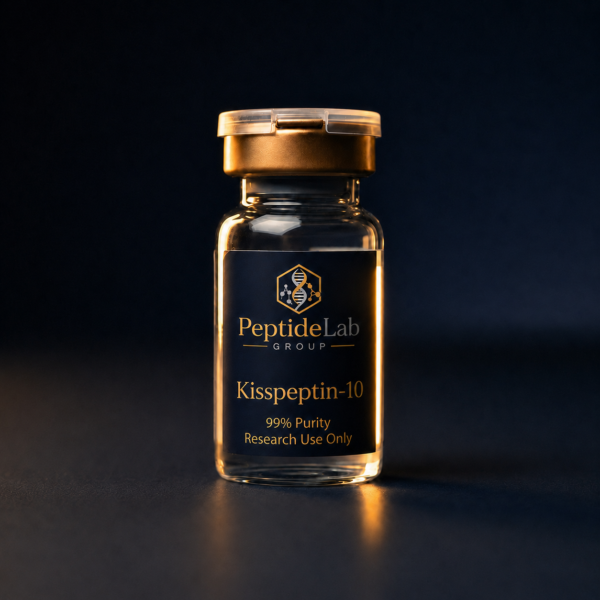
Kisspeptin-10
$64.99
Research peptide vial
Kisspeptin peptides are critical in human reproductive physiology and are potential therapies for infertility. Kisspeptin-10 stimulates gonadotropin release in both male and female rodents. However, few studies have investigated the effects of kisspeptin-10 on gonadotropin release in humans, and none have investigated the effect in women. If kisspeptin is to be useful for treating reproductive disease, its effects in both men and women must be established.
- Description
Description
Kisspeptin-10
Product Overview
Kisspeptin-10 from PeptideLab Group is presented as a premium research peptide vial for laboratory and analytical research use only. This product is listed under Hormonal Support Peptides for research buyers studying peptide signaling, endocrine pathway models, and hormone-related laboratory research categories.
PeptideLab Group presents Kisspeptin-10 with clean branded catalog formatting, professional research-use-only language, and product information structured for WooCommerce product pages.
Product Details
- Brand: PeptideLab Group
- Product: Kisspeptin-10
- Category: Hormonal Support Peptides
- Form: Lyophilized research peptide vial
- Use: Laboratory research use only
- Packaging: PeptideLab Group branded vial
- Documentation: COA, HPLC, and MS documentation may be available where applicable
Quality & Handling
This listing is structured for clear product comparison, catalog organization, and documentation-friendly research supply presentation. Product availability, batch details, and documentation support may vary by inventory.
Research Use Notice
This product is intended strictly for laboratory research use only. It is not intended for human consumption, veterinary use, medical use, diagnosis, treatment, cure, or prevention of disease. Buyers are responsible for understanding and following all applicable laws and regulations in their jurisdiction.
The kisspeptins are critical regulators of mammalian reproductive physiology . In humans, inactivating mutations of the kisspeptin receptor (KISS1R) cause pubertal failure , and activating mutations can lead to precocious puberty . The human kisspeptin peptides, kisspeptin-10, -13, -14, and -54, are named according to their number of constituent amino acids . All kisspeptin peptides share the C-terminal decapeptide sequence, kisspeptin-10, which is required for biological activity in vitro .
Central or peripheral administration of the shorter kisspeptin peptide, kisspeptin-10, has been demonstrated to stimulate gonadotropin release in several mammalian species . This effect is abolished by preadministration of an antagonist to the hypothalamic hormone GnRH . Kisspeptin-10 is therefore thought to stimulate the release of GnRH from the hypothalamus, which then stimulates gonadotropin release from the pituitary gland. The longer kisspeptin peptide, kisspeptin-54, has also been shown to stimulate gonadotropin release in rodents . In addition, administration of kisspeptin-54 stimulates gonadotropin secretion in humans . Kisspeptin therefore has the potential to become a novel therapy for treatment of reproductive disorders in humans.
The shorter amino acid sequence of kisspeptin-10 makes it simpler and cheaper to synthesize than kisspeptin-54. Future kisspeptin therapies may therefore be based upon kisspeptin-10 rather than kisspeptin-54. It is therefore therapeutically important to determine whether kisspeptin-10 can stimulate reproductive hormone release in healthy men and women. Kisspeptin-10 stimulates gonadotropin release in male rhesus monkeys . Furthermore, two recent reports have suggested that kisspeptin-10 administration to healthy men stimulates gonadotropin release . Although kisspeptin-10 is known to stimulate gonadotropin release in animals , there are no published data examining the effects of administering kisspeptin-10 to female primates or humans.
This study aimed to determine the effects of kisspeptin-10 administration on reproductive hormone release in healthy men and, for the first time, in healthy women.
Subjects were admitted to our Clinical Investigation Unit and asked to lay supine for the duration of each study. Urine was tested to exclude pregnancy in women (Clearview Easy-HCG; Inverness Medical Innovations Inc., Waltham, MA). All blood samples were analyzed for measurement of serum LH, FSH, estradiol (in women) or testosterone (in men), and plasma kisspeptin immunoreactivity (IR). Heart rate, blood pressure, and the presence of adverse symptoms were recorded at regular intervals.